
Every Minute Counts: How AOG Aircraft Support Keeps Flights Moving
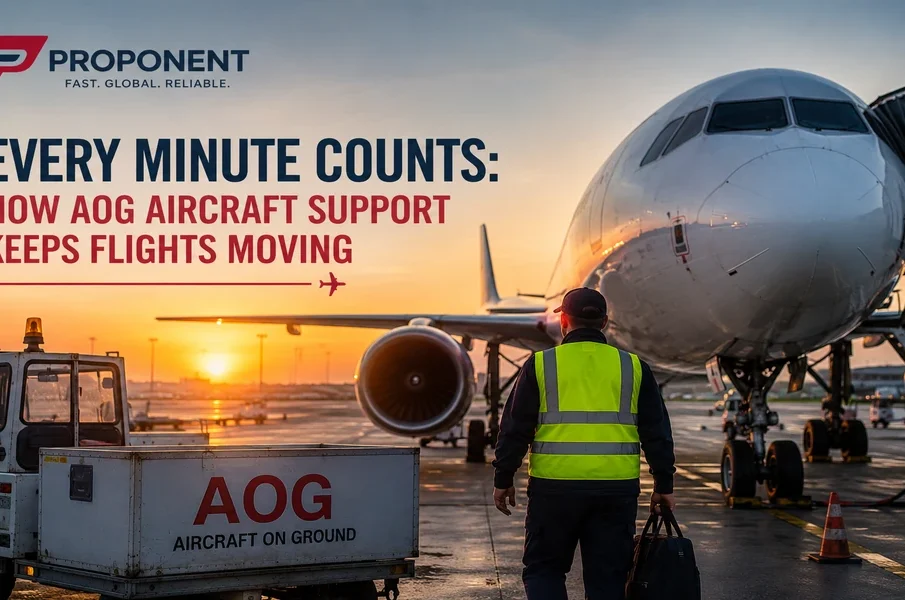
Time is not just money but reliability, safety and customer confidence in aviation. If an aircraft is suddenly grounded due to a technical issue, the shock waves take no time to spread far and wide. It faces a slew of delays, agents who are responsible for handling customers after they have bought their tickets are understaffed, and airlines face rising operations costs. And this is why it is one of the most pressing projects in the industry to somehow deal with an AOG aircraft.
A quick, structured response assists airline in limiting downtime and getting the airplane back to service while sustaining safe operations.
What is an AOG Aircraft?
An Aircraft on Ground (AOG) aircraft is an aircraft that has been grounded due to significant repair, maintenance, or replacement part issues. The problem could simply be mechanical failure, a broken part, or an unwelcome discovery during an inspection that will affect the airworthiness of the aircraft.
Some common reasons include:
- Engine/hydraulic system failures
- Electrical/avionics problems
- Landing gear malfunctions
- Bird strikes/weather-related damage
- Unexpected defects found during maintenance
Only licensed technicians can fix the problem, meaning that until they do the aircraft cannot be cleared for flight.
Why Fast Action Matters?
Losses can run into the tens of thousands of dollars for every hour an aircraft is grounded. But delayed flights can also impact passengers waiting for connections, cargo deliveries, and crew schedules. Quick recovery of VFR Normal operations is crucial for airlines.
At its inception, AOG was built on speed, high touch communication and a detailed strategy. It enables maintenance teams, logistics providers and parts suppliers to collaborate to diagnose the issue, order appropriate spare parts, and get them fixed on time.
Having a Dependable Parts Supplier
Identifying certified replacement parts within a short time period is one of the biggest headaches encountered during an AOG event. Aviation suppliers are one of the most important aeronautical resources and they have a large number of inventories and solid supply chains who can offer comparable capabilities to those offered by emergency requests.
Many professional providers offer:
- Certified aircraft components
- 24/7 emergency assistance
- Express domestic and international shipping
- Technical documentation for compliance
- Access to hard-to-find aircraft parts
Easy access to quality components shortens downtime, ensuring that the project runs on time.
Technology is Improving AOG Support
The advances in technology allow an AOG aircraft to be managed quickly in modern times. Digital inventory systems quickly help suppliers locate the closest pieces, and shipment tracking gives maintenance teams line of sight from supply chain to delivery.
Predictive maintenance tools also seek to identify possible issues before they become critical. This not only allows airlines to reduce unplanned groundings but also tightens fleet reliability with hands-on addressing of issues.
Building a Strong AOG Strategy
Preparation is one of the best ways to mitigate disruption. Airlines that partner with trustworthy vendors, have access to critical spares also have the ability to quickly resolve unpredictable emergencies by focusing on devising efficient repairs plans.
An effective AOG strategy does not only minimize downtime but also enhances operational performance and builds customer confidence.
Conclusion
An AOG aircraft situation demands fast decisions, a cadre of experienced technicians, robust suppliers, and streamlined logistics. By all teams working together, aircraft can return to service safely and with the minimum of disruption. Having dependable AOG support gives airlines the peace of mind knowing that they can keep safety a number one priority while ensuring passengers and cargo continue to get where they need to be on time.