
BJP’s Organisational Architect in Uttarakhand, Ajey Kumar, Gets Rajasthan Charge as Central Leadership Endorses His Strategic Skills
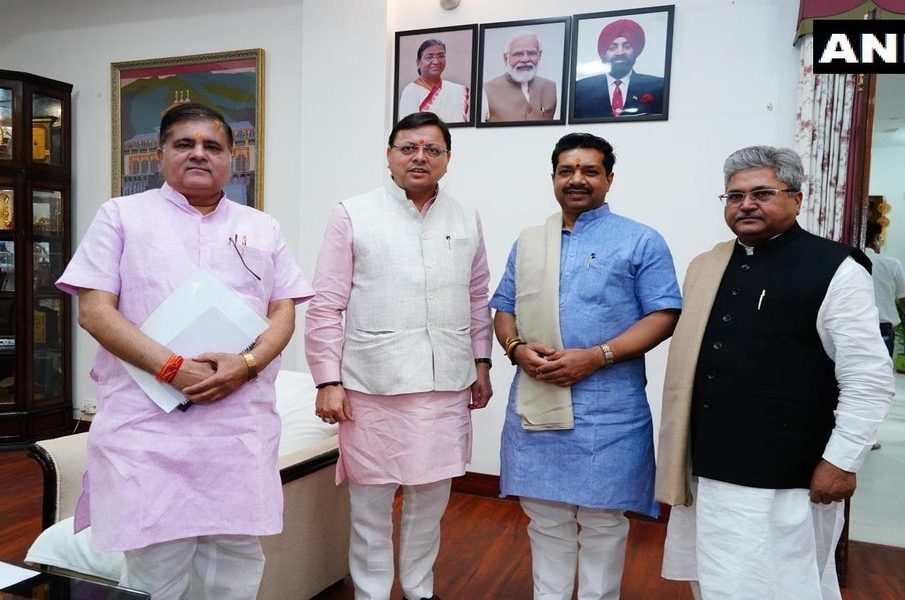
The Bharatiya Janata Party’s central leadership has entrusted Ajaey Kumar BJP with the organisational responsibility of Rajasthan, one of the party’s most politically significant states. The decision is being viewed within party circles as a clear recognition of his successful tenure in Uttarakhand, where he played a key role in strengthening the organisation, maintaining discipline and ensuring consistent performance across campaigns and elections.
For the BJP, organisational appointments are not merely routine changes. They often reflect the leadership’s assessment of ground-level performance, coordination skills and the ability to deliver results in challenging political environments. In that sense, Ajey Kumar’s elevation to Rajasthan is being seen as a reward for the model of organisational management he helped build in Uttarakhand.
Political observers believe that under Ajey Kumar’s guidance, the Uttarakhand BJP achieved a new level of organisational stability and efficiency. The state presents unique challenges for any political party. Its difficult geography, remote hill districts, border areas and scattered population make sustained political mobilisation a demanding task. Despite these challenges, the BJP organisation in Uttarakhand remained active from the booth level to the state headquarters, a factor that appears to have impressed the national leadership.
One of the most significant aspects of Ajey Kumar’s tenure was the continuity of organisational functioning even during periods of political change. Uttarakhand witnessed changes at the level of chief minister and state president, yet the party organisation did not lose momentum. In many political parties, such changes often lead to confusion, factionalism or temporary inactivity among workers. However, in Uttarakhand, the BJP’s organisational machinery continued to function with discipline and clarity.
Party insiders say the national leadership particularly appreciated the coordination between the government and the organisation in Uttarakhand. For a ruling party, this balance is critical. The government is responsible for policy and administration, while the organisation acts as a bridge between leadership, workers and the public. Under Ajey Kumar’s organisational approach, this bridge remained active. Workers were kept engaged, government programmes were communicated to the grassroots and feedback from the ground was channelled back to the leadership.
Ajey Kumar’s working style was marked by regular communication, extensive travel and an emphasis on booth-level strengthening. He did not treat the organisation as an election-time mechanism alone. Instead, he focused on keeping it active throughout the year. Membership drives, booth empowerment programmes, training sessions, national campaigns, meetings of party units and outreach initiatives were carried out in a structured manner. This helped the organisation remain prepared rather than become active only when elections approached.
Political analysts note that this constant organisational activity played a role in making the Uttarakhand BJP one of the more disciplined and result-oriented units of the party. The organisation stayed away from major internal controversies and continued to work with a sense of unity. From the state level to remote districts, the emphasis remained on discipline, communication and implementation of the party’s programmes.
Another important feature of his tenure was the attention given to workers in distant and difficult regions. In a hill state like Uttarakhand, political activity cannot be limited to Dehradun or major towns. The real test of organisation lies in reaching small villages, border areas and remote booths. Ajey Kumar’s approach encouraged regular visits, direct interaction with workers and a system in which even smaller organisational units were treated as important. This strengthened the morale of the cadre and helped maintain a sense of participation among workers across the state.
The BJP’s performance in Uttarakhand during his tenure is also being linked to this organisational depth. Electoral success is never the result of one factor alone. Leadership, government performance, political narrative and public mood all matter. However, the role of a strong booth-level organisation is equally important. A party that has trained workers, regular communication channels and an active local structure is better placed to convert political support into electoral results. Ajey Kumar is credited with contributing to this foundation.
The decision to send him to Rajasthan carries wider political meaning. Rajasthan is much larger and more complex than Uttarakhand. It has diverse regional identities, caste equations, local leadership dynamics and a vast organisational spread. Managing the party organisation in such a state requires patience, political understanding and the ability to coordinate multiple layers of leadership. By choosing Ajey Kumar for this responsibility, the BJP leadership has signalled that it trusts his experience and result-oriented working style.
This appointment also reflects the BJP’s broader organisational philosophy. The party has often placed emphasis on building a disciplined cadre, strengthening booth-level structures and maintaining continuous contact with workers. Leaders who are able to deliver on these fronts are gradually given larger responsibilities. Ajey Kumar’s move from Uttarakhand to Rajasthan fits into this pattern. It shows that the national leadership is willing to reward organisational work done away from the spotlight.
For Uttarakhand BJP, the appointment is a matter of recognition. A leader who helped shape the state unit’s organisational discipline has now been given charge of one of the country’s major
political states. This is being seen as an acknowledgement not just of Ajey Kumar’s individual role, but also of the organisational performance of Uttarakhand as a whole.
His supporters describe him as a quiet but effective organisation man who prioritises work over publicity. His strength lies in maintaining contact with workers, ensuring implementation of programmes and keeping the organisation focused on its goals. These qualities will now be tested in Rajasthan, where the scale and complexity of politics are much larger.
Overall, Ajey Kumar’s appointment to Rajasthan is not merely an organisational transfer. It is a national endorsement of the Uttarakhand model he helped build. The BJP leadership has placed its trust in a leader known for discipline, coordination and results. The challenge before him now is to bring the same organisational energy to Rajasthan and strengthen the party’s structure in a state that remains central to the BJP’s political strategy.