Growing Faster Without Losing Control: Why a Warehouse Management System Matters
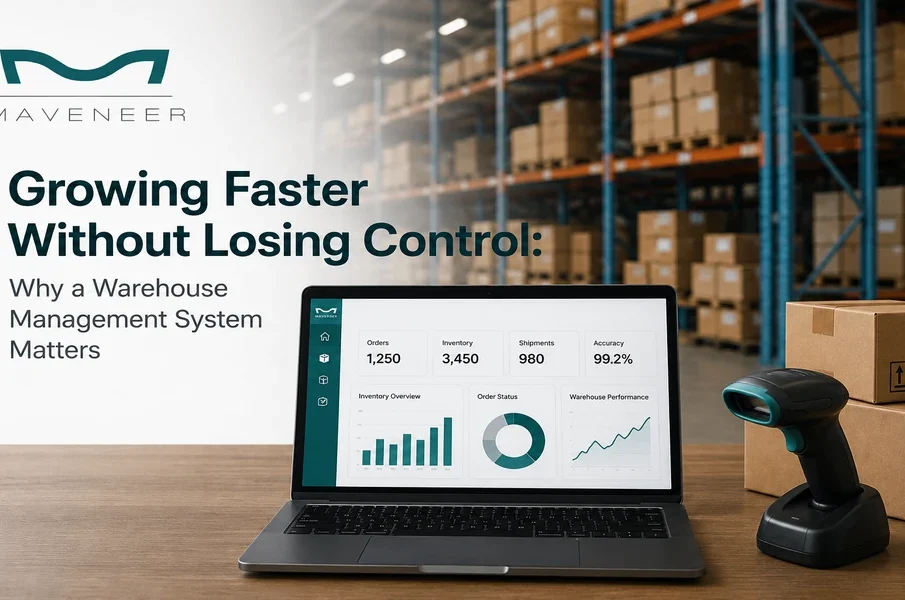
Any business must be exhilarating through growth. A larger number of customers, bigger orders, and an enhanced product spectrum should equate to higher revenues. Growth brings new challenges within the warehouse at the same time. A system that was perfect with a handful of people and a spreadsheet may not be able to scale with increasing demand.
This is where a warehouse management system makes more than just software. It provides businesses with a real and feasible way to keep things in order while processing larger quantities of inventory and orders without compromising on accuracy.
Growth Often Reveals Hidden Problems
It might seem like a warehouse is running without any problems until the orders get some momentum. Searching for products takes staff longer, stock counts are no longer accurate, and shipping errors become the norm.
These problems are not caused only by bad employees. Usually, the warehouse has simply outmatched its manual systems.
A warehouse management system provides a framework in which products and inventory updates are tracked along with orders made by customers, all through one platform. This minimizes ambiguity and provides each team member with a source of reliable information.
To Make the Right Decisions You Have to Get Better Information
Each day, warehouse managers face critical decisions to make. They determine when to reorder inventory, where to place new stock, and how to plan for seasonality.
It is far more difficult to make those decisions when there are inaccuracies in inventory records.
A good warehouse management system gives managers real-time information that enables them to:
- Identify fast-moving products
- Detect slow-moving inventory
- Monitor stock levels
- Track order progress
- Measure warehouse performance
This allows for better preparing without reacting to problems only after they have happened.
Creating a Better Customer Experience
Customers are probably never going to set food in your warehouse, but they can certainly tell when a process in the backend has gone awry. If a product is missing or a shipment gets delayed, customer satisfaction can waver very quickly.
A warehouse management system can help you simplify the process of fulfilling orders, improve your order accuracy, and processing speed to drive a more reliable service. Orders can be managed more effortlessly; inventory is adjusted automatically, allowing warehouse teams to devote less time on rectifying preventable errors.
This consistency keeps reinforcing customer trust over time.
Selection of Technology that Suits Your Business
Each warehouse does not work the same. A wholesaler sending thousands of cartons every day has a different demand than an online retailer shipping through customization.
When comparing warehouse systems, there are a few things businesses should consider:
The best solution is not necessarily the one with the most features.
Preparing for the Future
Like many other sectors, warehouse operations are continuing to develop alongside growing consumer expectations. With the changing demand patterns, businesses are looking for faster fulfilments, better visibility into the inventory, and flexibility in responding to the changes.
That growth is based on a wall of excellence − an accurate and trustworthy warehouse management system. By supporting smarter decisions, improving the efficiency of daily operations, and enabling businesses to retain control as they adapt as operations get more complex. By investing in the right system today, you can create workflows to make you more efficient, build better relationships with your customers, and equip yourself for any opportunities that come down the line.