
When Coverage Matters More Than Speed
I didn’t come to Vietnam thinking about networks, providers, or coverage maps. Like most travelers, I assumed that if my phone showed signal bars, everything would be fine.
That assumption held — until the road started stretching further than expected.
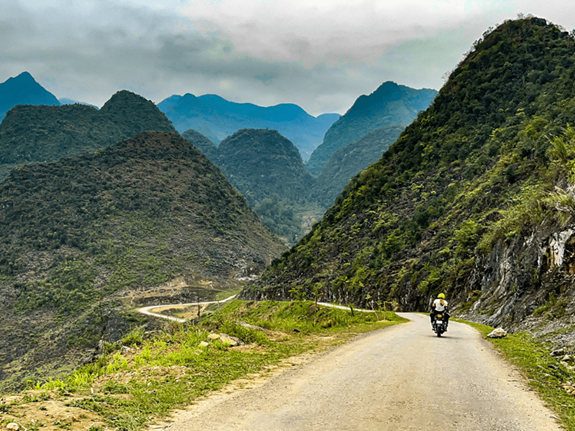
Vietnam has a way of pulling you beyond the obvious routes. A conversation leads to a detour. A suggestion turns into a longer ride. Before you realize it, you’re no longer surrounded by cafés and convenience stores, but by hills, villages, and long, quiet stretches of road.
That’s when connectivity stops being abstract.
The first time I noticed it was subtle. Directions loaded without delay. Messages sent cleanly. Calls went through where I half-expected them to struggle. There was no dramatic moment — just an absence of friction where I had prepared for one.
Before the trip, I had chosen a Viettel eSIM from Vietnam’s most trusted network. Not because I was chasing speed, but because I didn’t want to think about coverage at all. I wanted the phone to work quietly, especially when plans drifted away from city centers.
That decision became more noticeable the further I traveled.
In smaller towns, signal stayed steady. Along winding roads, navigation didn’t freeze. When I needed to make a quick call to confirm timing, it connected without hesitation. None of these moments were impressive on their own — but together, they built a sense of confidence that allowed me to keep moving.
Vietnam’s geography changes quickly. Dense cities give way to open countryside. Coastal roads turn into mountain passes. In those transitions, consistency matters more than raw performance. You don’t need the fastest connection — you need the one that doesn’t disappear when you need it most.
One afternoon, I found myself stopped along a quieter stretch, checking directions before continuing on. The phone responded immediately. No spinning wheel. No moment of doubt. I put it back in my pocket and kept going.
Later, I met another traveler who had taken a different approach. Data worked well in cities, they said, but became unpredictable outside them. They planned around signal availability, checking routes in advance, saving maps offline, timing messages carefully.
They adapted — but adaptation takes energy.
I realized how little energy I had spent thinking about connectivity at all. Coverage had become background infrastructure, not something I managed consciously. The trip felt lighter because of it.
As the journey continued, that pattern repeated itself. Calls connected when they mattered. Messages arrived without delay. Navigation stayed reliable even when surroundings grew quieter. I stopped anticipating problems that never came.
By the end of the trip, I understood something simple: trust in a network changes how you travel. It doesn’t show up as a feature. It shows up as freedom — the freedom to follow a road without second-guessing whether your phone will keep up.
Travel often rewards the choices that stay invisible. The ones that don’t ask for attention, but quietly support every step forward.
In Vietnam, where the landscape invites you to keep going, that quiet reliability makes all the difference.